
Eswatini launches FAO projects to support farmers
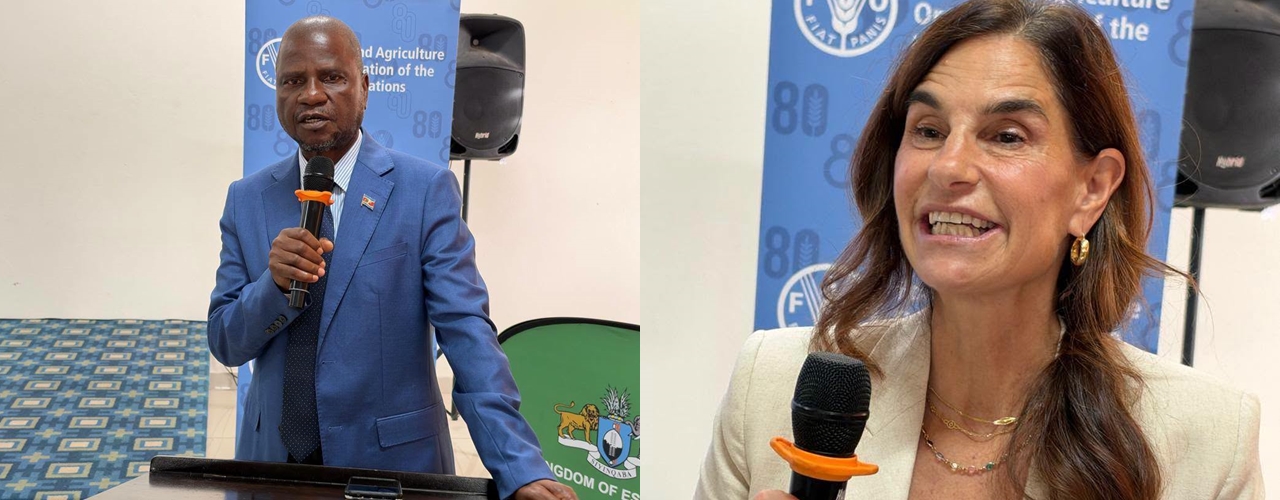
Mbabane, Eswatini Minister of Agriculture Mandla Tshawuka has welcomed new support from the Food and Agriculture Organization of the United Nations (FAO), as the government steps up efforts to strengthen agricultural skills and protect farmers against the effects of the El Niño induced drought.
Tshawuka commended the UN agency for its longstanding partnership with the Ministry of Agriculture, pointing to several joint initiatives, including ongoing efforts to combat Foot and Mouth Disease (FMD).
He was speaking during the official launch and inception workshop of two FAO Technical Cooperation Projects (TCPs), namely the Graduate Trainee Programme (TCP/SWA/4103) and Emergency Support on El Niño Induced Drought (TCP/SWA/4104).
The two initiatives are designed to address different but interconnected challenges facing Eswatini's agricultural sector, including the shortage of practical agricultural advisory skills and the growing threat of climate related disruptions to food production.
The Graduate Trainee Programme seeks to strengthen agricultural extension services by providing specialised farm advisory training to graduates from the University of Eswatini's (UNESWA) Faculty of Agriculture.
The initiative is intended to bridge the gap between university education and the practical demands of working in the agricultural sector.
Under the programme, recent agriculture graduates will undergo an intensive training course lasting between nine and 12 months. The programme will combine professional coaching, practical experience, networking opportunities and placements at farms of different sizes.
Participants will be exposed to everyday farm operations, where they will advise farmers, maintain agricultural records, engage with suppliers and develop a better understanding of farm management requirements. They will also document the needs of farming enterprises to strengthen their capacity to provide relevant technical guidance.
The second project, TCP/SWA/4104, focuses on anticipatory action and emergency assistance in response to the El Niño induced drought, which is already affecting agricultural production during the 2026/2027 forecast period.
The intervention forms part of household level early action measures under the Agriculture and Food Security cluster and supports the country's El Niño preparedness, response and recovery plan.
Its activities are designed to safeguard essential agricultural resources and protect farmers' ability to continue production despite unfavourable weather conditions.
These include protecting productive assets, preserving seed stocks, maintaining soil moisture, securing water storage facilities and safeguarding breeding herds.
Tshawuka called on stakeholders involved in implementing the projects to ensure that the resources allocated reach the intended beneficiaries, particularly farmers facing increasing pressure from drought conditions.
"May these monies touch the people's lives and we express our utmost empathy to those farmers who are already feeling the wrath of the El nino induced drought especially in areas such as Lavumisa".
Lavumisa, in the country's lowveld region, is among the areas facing difficult agricultural conditions, making timely interventions critical for households whose livelihoods depend on farming.