

Diplomacy is often measured in communiqués, handshakes and photographs. On Friday, 3 July 2026, at the Raleigh Fitkin Memorial Hospital in Manzini, it was measured in something far more meaningful: a hospital powered almost entirely by the sun, and rivers across our country that now speak to us in real time.
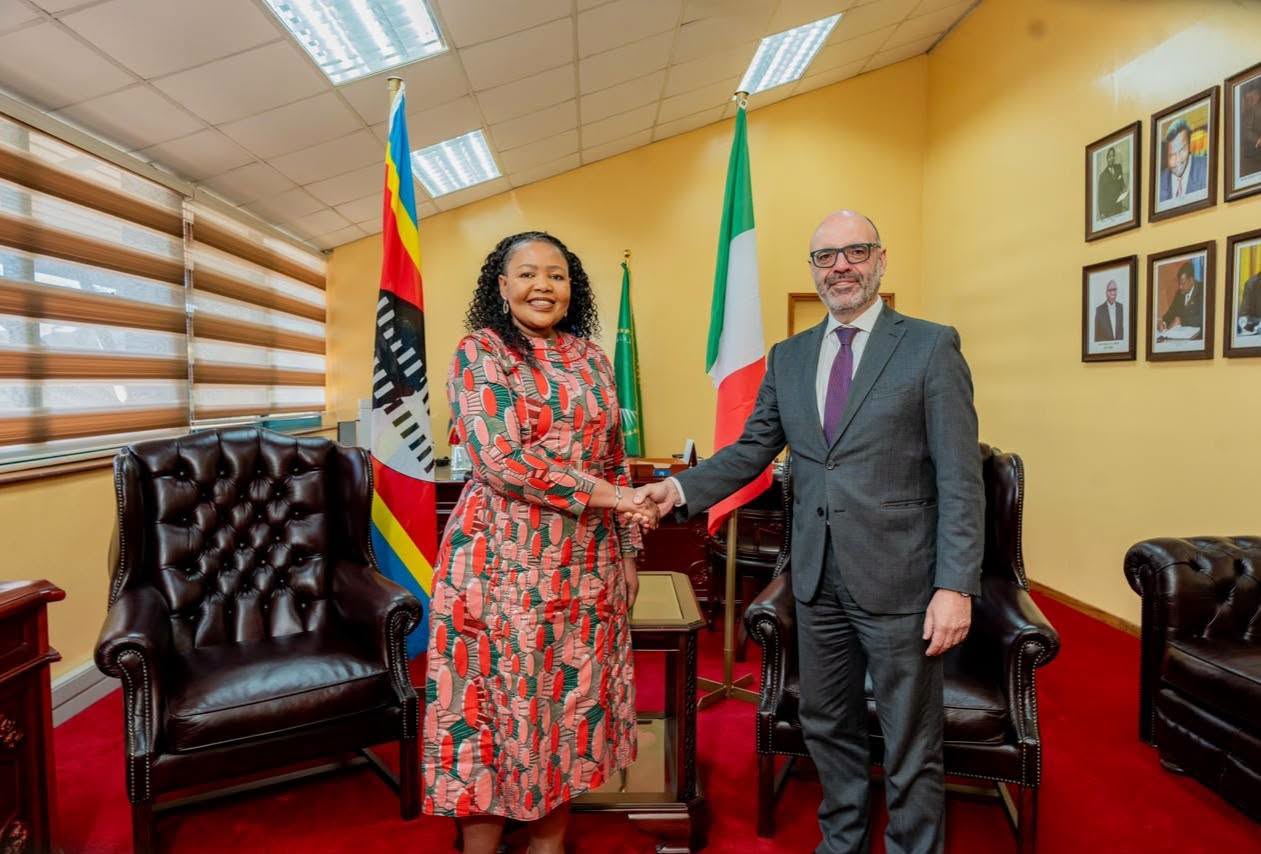
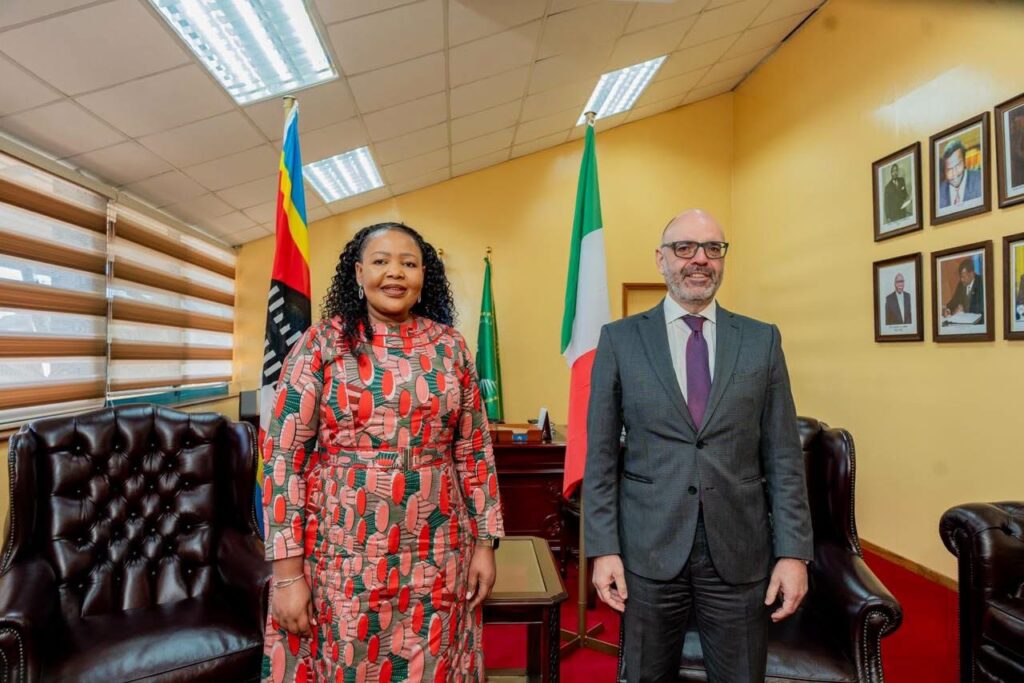
On Friday morning, the official handover of two completed projects funded by the Government of Italy, valued at over E109 million, took place at RFM Hospital. The event was graced by the Deputy Prime Minister, Honourable Thuli Dladla, representing the Right Honourable Prime Minister, alongside the Italian Ambassador to Eswatini, His Excellency Gabriele Annis, the Minister for Tourism and Environmental Affairs, Honourable Jane Mkhonta-Simelane, Cabinet colleagues, the UNDP Representative and senior government officials. Following the handover, I had the honour of receiving Ambassador Annis for bilateral talks, where I conveyed the gratitude of the Government and people of Eswatini for Italy’s generous and practical partnership.
The first is the Greening of RFM Hospital. One of our nation’s most important health facilities now runs on approximately 98 percent solar photovoltaic energy, anchored by a one megawatt solar plant with battery storage, supported by electric laundry machines, an electric boiler, efficient lighting, heat exchangers and modern air conditioning. The numbers tell their own story. Monthly electricity costs have fallen by half, from about E400,000 to below E200,000, while the elimination of coal use saves the hospital roughly E300,000 every year. Those savings do not vanish into a ledger. They flow back into patient care, into medicines, into the daily work of healing.
The second project, the Strengthening of Early Warning Systems and Climate Services, is less visible but no less vital. Automated hydrometric stations have been installed at priority river gauging points across the country, transmitting daily river level data to a central database in real time. Where officers once collected readings by hand, abnormal river flows can now be detected early, allowing warnings and preparedness measures to be activated before disaster strikes. In a warming world where floods arrive with less and less notice, this technology will save lives.
A partnership built patiently
Neither of these projects happened overnight. Their foundation was laid in 2017, when Eswatini and Italy signed a Memorandum of Understanding on climate change, environmental management and energy development, an agreement we renewed in 2025. What followed was years of quiet, disciplined work involving the Ministry of Tourism and Environmental Affairs, the Ministry of Natural Resources and Energy and the Ministry of Health, with the United Nations Development Programme providing technical support throughout.
This is what I mean when I say diplomacy delivers. A memorandum signed nine years ago is now a solar plant humming above a hospital in Manzini and a network of sensors watching over our rivers. Foreign policy, done properly, is not an abstraction. It is infrastructure, savings, preparedness and dignity.
Rome as a bridge, not just a capital
Our relationship with Italy also reminds us that bilateral friendship and multilateral engagement reinforce one another. Rome hosts the Food and Agriculture Organization, the International Fund for Agricultural Development and the World Food Programme, institutions at the heart of global food security and rural development. Our shared presence in that city means Eswatini and Italy meet not only across a bilateral table but within a wider architecture of cooperation on development, food security and climate resilience.
For a small state, this matters enormously. We cannot be everywhere, but we can be strategic. By nurturing partnerships that operate on both tracks at once, Eswatini multiplies its diplomatic reach and ensures that global conversations reflect the realities of countries like ours.
Climate action as national interest
Some still speak of climate cooperation as charity, or as a distant global concern. I reject both framings. The projects handed over on Friday advance Eswatini’s own commitments under our National Climate Change Strategy, our NDC 3.0 and the Paris Agreement. They cut costs for our health system, strengthen our disaster preparedness and build local technical capacity. Climate action is not something done to us or for us. It is national interest, pursued with trusted friends.
In our talks, I thanked Ambassador Annis on behalf of the Government and people of Eswatini, and I do so again here. Italy has proven itself a partner that follows commitment with delivery. Our task now is to build on this momentum, to develop the next generation of projects under the renewed MOU, and to keep demonstrating that when Eswatini engages the world, our people feel the results in their hospitals, their rivers and their communities.
That is the diplomacy I believe in. Not words for their own sake, but partnerships that leave the country stronger than they found it.